Writing

I spent ten days traveling through the island of Cyprus, a small country in the Mediterranean Sea at a unique geographical crossroads between Europe and Asia.
Despite its relatively recent status as an official state, the island bears a rich history punctuated by colonial rule, occupations, and, most recently, a conflict that left the island divided.
The complexity of a land long-marked with political turmoil left me in Pomos, near the end of my journey, struggling inarticulately to give shape to my impressions.
What was it about Cyprus that had managed to move me?
Now, back in America, I’m able to finally provide clarity to my thoughts.

It is a place where the people maintain a sense of openness and sociability that is a hallmark of warm, Mediterranean countries. There’s an underlying sense of pride in Cypriot cultural identity that permeates conversations with locals: a smile or nod of approval when expressing interest in the history, a rapid lesson on how Greek culture has shaped Western civilization, and the deep-rooted sense of hospitality and insistence to show a foreigner the beauty of what the country has to offer.
On the flip side, there’s a sense of ruggedness carried by many individuals I encountered. Given how recently the devastating conflict between Cyprus and Turkey divided the island, I sensed a cloud of awareness amongst many on the island.
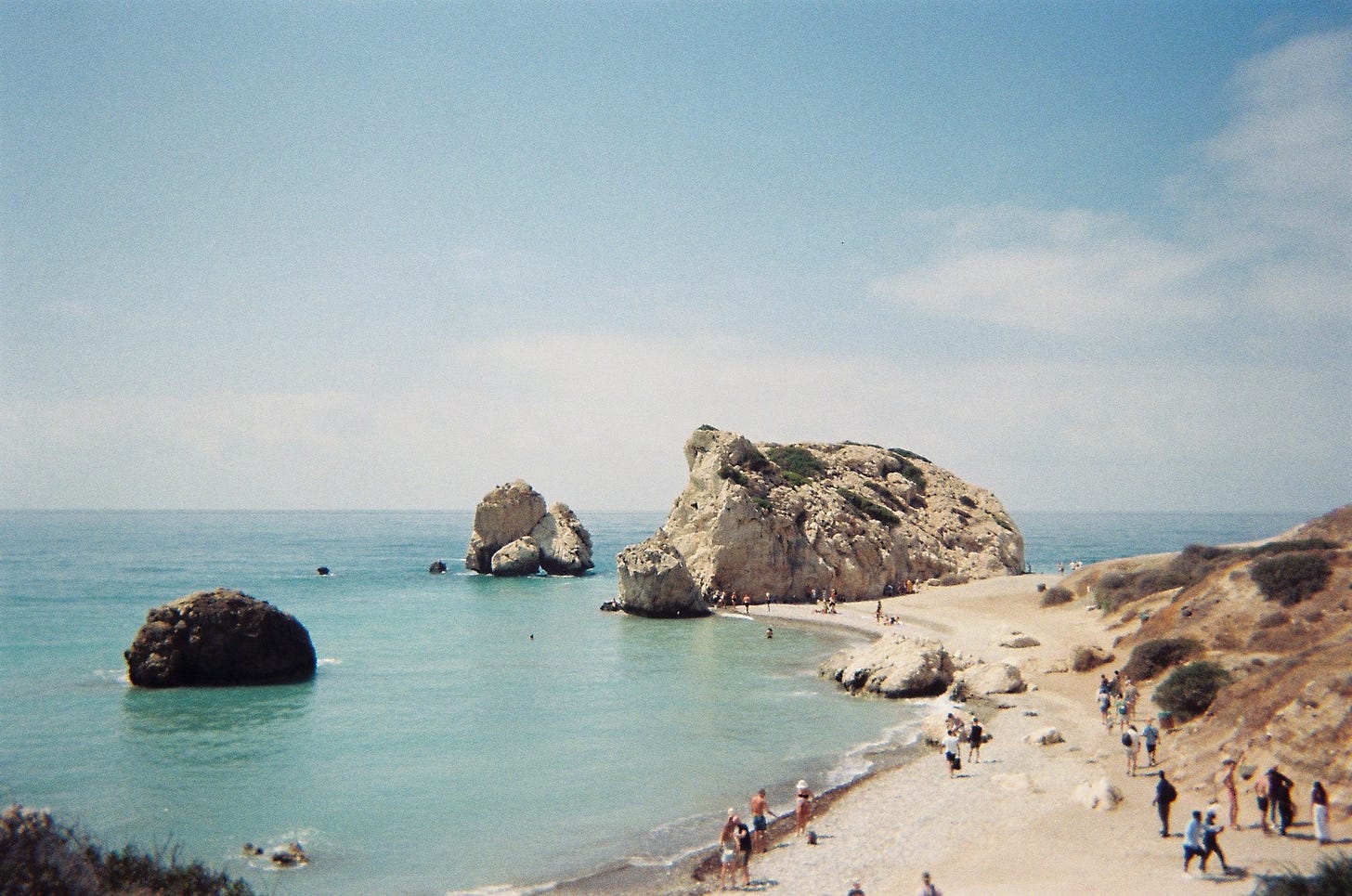
An awareness, that despite the profound beauty of the island with its glittering blue waters and golden sands of the island that inspired Botticelli’s Birth of Venus, that the world is not perfect, and in fact, can be quite cruel.
I witnessed it wandering through an art gallery in Nicosia featuring pieces by local artists—a painting depicting an older Cypriot woman with soldiers in the background, set against a garish red backdrop.
I heard it when speaking to individuals who had family members displaced during the War, and found that their former residences were now occupied.
I felt it when crossing the checkpoint into the occupied territory to travel to Karpasia, where I had my passport checked to cross into a territory recognized only by Turkey.

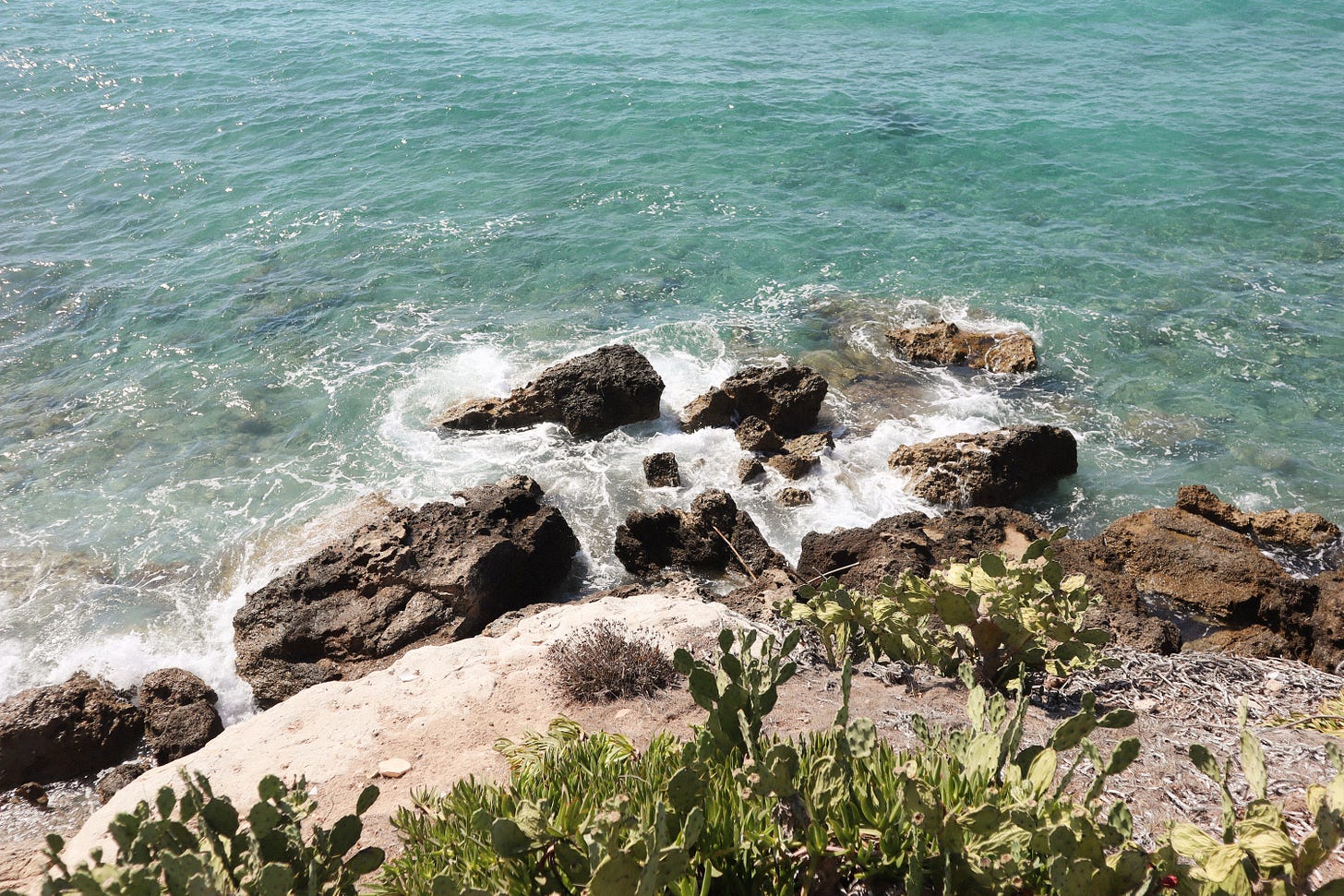
This dichotomy of Cypriot culture, a warmth and kindness set among beautiful mountains, seas, and beaches, yet tempered by a remembrance of its difficult past, lent itself to being a beautiful country to visit, inseparable, however, from its scars.
In many ways, it reminds me of Aristotle’s words:
“Virtue is the golden mean between two vices. The one of excess and the other of deficiency.”
Perhaps it is this balance, the mean between joy and pain, hospitality and hardship, that makes Cyprus so profoundly beautiful.