Writing

Shanghai 1938 was the name of the restaurant my parents decided to open in Champaign-Urbana. The name contained numerous odes to my father’s culture and family — Shanghai was the birthplace of my grandmother, 1938 represented the decade she was born into, the number 8 is a lucky Chinese number, and the general time period was a golden era of prosperity for the city. It was a beautiful restaurant with bamboo plants placed on every table, oak edges, and deep maroon leather seats. My parents had purchased the space and completely renovated everything, staying up late at night and sending us to the babysitters while they worked with the contractors on the restaurant in preparation for the grand opening.
The years spent at the restaurant were exhausting. I don’t think many people realize how difficult it is to run and manage a restaurant, nor do they understand the implications it has on everyone involved with the establishment. Numerous studies have demonstrated a strong correlation between the development of personality disorders and mental illnesses with an unstable childhood and home environment. Restaurant children, particularly those associated with Chinese restaurants, bear an unbelievable amount of pressure culturally, physically, and mentally. The restaurant children phenomenon, coupled with the stigma that mental health carries within Asian communities, has resulted in a lack of documentation on the experiences of restaurant children until very recently, thanks to social media. As young children, witnessing our parents work endless hours per week and experience racism from customers while simultaneously balancing the difficulties of parenting is a traumatic experience. It’s my true belief that learning that there are others who grew up like me and are able to empathize with my thoughts and feelings has contributed strongly to the healing process. Hearing stories of others has allowed me to finally understand why I am the way I am and provided comfort in knowing that I was never alone with my burdens.
There’s a direct correlation between the Chinese food industry in America and racism, dating all the way back to the Chinese Exclusion Act of 1882. The early 19th century Gold Rush attracted a plethora of Chinese laborers from the Canton region to California, where they eventually opened up numerous food establishments that were frequented by both Americans and native Chinese who ate delicious, filling meals for cheap prices (Rude). Yet, over time, as gold resources declined and tensions between American and Chinese workers grew, there was a rise in anti-Chinese sentiment. The restaurants that had once been praised by so many individuals were now being called “nuisances,” and hate groups claimed that there were stenches coming from the kitchens (Rude).
To this day, Chinese restaurants carry a similar stigma. When one thinks of Chinese food, they’re often thinking of large portions, fast, cheap food, grease, and unsanitary conditions. It’s an unfortunate stereotype that many restaurant owners have fought hard against — my parents included. Shanghai 1938’s goal was to provide authentic, delicious Chinese food with an elevated twist. The hard reality was that my parents found themselves battling against many issues, including the 2008 financial recession, a racist, negative perception of Chinese food, and two young children who were in the midst of their development. Considering that I was the eldest child and decently mature, my parents decided to keep my brother and me at the restaurant at all times. We had negative experiences with babysitters, and our elementary school was nearby, making it convenient to just stay at the business while they worked. At the age of six, I quickly learned to become involved, whether it was helping my parents take orders, serving food, or making phone calls; my involvement with the restaurant only increased as I grew older.
The restaurant industry is already harsh and competitive as it is, with approximately 60% of restaurants failing within their first year and 80% not even making it to 5 years (Bellini). One of the most difficult aspects of the business is the fact that it’s customer service-oriented. In a survey conducted by Business Insider on the restaurant industry, 62% of 4,700 respondents reported emotional abuse from customers, and 49% reported abuse from managers (Meisenzahl). These statistics indicate not only a competitive industry but also an abusive one and are reflective of the toxic encounters I personally witnessed growing up in the environment.
A 2013 journal investigating the cultural creation of customer abuse of service workers states that the “… the weak position of labour in many service organizations, the low-status shield of service workers and the disembedded nature of many interactions between customer and worker…” are the reasons why “…customer abuse is, therefore, likely to be strongly entrenched in the organization of the service economy” (Korczynski and Evans 14). Essentially, many people view those who work in service-oriented jobs as beneath them, and without proper protection for the workers, customer abuse is extremely prevalent. I implore you to imagine the customer abuse that occurs within minority-owned businesses that must also deal with racism, homophobia, etc, in addition to the toxic, deeply rooted preexisting issues of the service industry.
I admit that the environment of Shanghai 1938 was calmer in comparison to other Asian restaurants in the area due to its nice interior and “higher profile customers.” Yet around 2008/2009, during the recession, I began to notice the way people would interact with my parents. It started off with grumblings about the prices and then comments about my dad’s accent, escalating into racist prank calls and threats about calling Child Services on my parents because they were “forcing me to work,” and eventually, glass being hurled at our windows from drunks who yelled racial slurs. Watching these events unfold as a seven-year-old quickly opened my eyes to the harsh realities of society and also induced the budding symptoms of trauma that would haunt me into adulthood.
As a child, I recall feeling so defenseless and angry as I witnessed these vile interactions happen. At night, I would silently cry and pray to God that life would be kinder to my parents, and promise Him that one day, I would be so successful and powerful that nobody would ever be able to bully my parents again. It’s a promise that continues to drive me to this day. In the BBC documentary linked above, one of the restaurant children says something that resonates with me quite deeply. “Cause we’re born here, we understand the context of ‘Oh, do you order dog?’ we know that that’s racist. But our parents just genuinely think it’s just kids being kids. In the world, our parents are meant to protect us, but in some ways, we protect them by not telling them why what they did was wrong” (BBC). Similarly, what broke my heart the most was watching how people would speak to my father sarcastically and patronizingly due to his thick accent. He’d turn to me and ask me to translate for him, and I would do so in a way that eliminated the racist, rude undertones of what they said. My only form of helping them was to shield them from the abuse whenever I could.
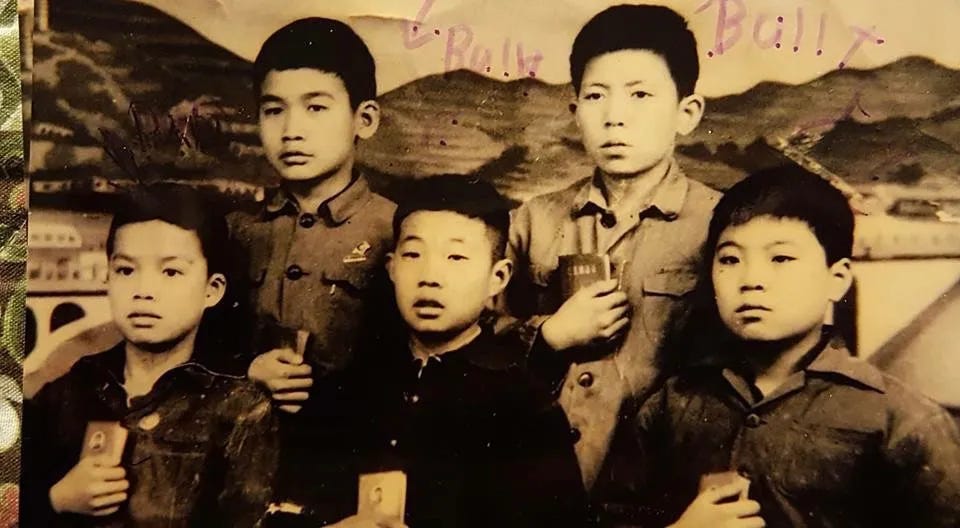
One might ask why my parents continued with the business if it was truly so grueling at times. A 2019 New York Times article, Chinese Restaurants Are Closing. That’s a Good Thing, the Owners Say, highlights the struggles of takeout restaurant owners who often work 80-hour weeks with no holidays. The article also notes that many Chinese immigrants who came to the U.S. after the Cultural Revolution of 1966 did so seeking freedom and economic opportunity. As the article states, “…they did not come to be chefs; they came to be immigrants, and cooking was a way they made a living” (Nierenberg and Weingart). I think of my father — a man with a love for history and politics and a former teacher in China — and realize that, arriving in the U.S. with limited English, running a restaurant was never his dream. Yet he worked tirelessly, often 80 hours a week, to provide a better life for my brother and me.
The harsh reality of many Chinese restaurants is that the people running them, particularly the older generation like my father, had opportunities stripped away during the political turmoil of the Cultural Revolution. They came to the U.S. to provide the next generation with a better life, often working long hours in restaurants as a means of survival. In recent years, Chinese restaurants have steadily declined, with many closing despite ongoing demand (Nierenberg and Weingart). This trend reflects upward mobility: children of restaurant owners increasingly pursue high-paying careers in consulting, technology, or medicine, reducing the necessity for their parents to endure grueling work. For those disenfranchised by political and socio-economic instability in their home countries, running a restaurant has long been a proven path to providing for their families.
Early exposure to such a brutal working environment has undoubtedly left its mark — for many years, I avoided reflecting on those experiences, though their effects became increasingly apparent as I grew older. A psychiatrist I saw acknowledged that my early years likely contributed to lingering mental health struggles, noting that “family adversities and maladaptive parental behaviours predicted increased risk for difficulties in very young age” (Bozzatello 6). Growing up, I often felt profoundly alienated from my peers. Everyone else’s lives seemed “normal,” while mine did not. While other kids went home after school, I would sit in a booth, doing homework or practicing piano in the dining area before the dinner rush. For years, I convinced myself that nothing was wrong, but the lingering impact of those early years was impossible to ignore.
Traits I have always exhibited include a general discontentment with life, mood swings (particularly an explosive temper), loneliness, a general lack of restraint with speech and behavior, and unstable friendships. Now that I’m older and reflecting on my past, it’s easy to see how the restaurant specifically shaped these tendencies in me. During rush hour, when orders are flowing in but the kitchen is backed up, people don’t speak nicely to each other; rather, they yell at one another, in part due to the loud kitchen noise but also to express frustration at the stressful situation. My discontentment with life and general lack of restraint with my behavior and speech stems partly from my blunt nature but is also coupled with the awful memories of watching strangers verbally abuse my parents and the burning desire to become successful enough to protect them. Additionally, the fact that I never had anybody to relate to my childhood experiences has turned into a general feeling of loneliness that I continue to carry. I’ve been described as extremely charismatic and extroverted from a young age, most likely due to the numerous social interactions I was forced to endure early on with other restauranteurs, landlords, lawyers, contractors, and customers. On the other hand, despite my charisma, my entire life has been filled with tumultuous friendships that come and go, and an unwillingness to trust and open up to others until I met my former partner.
My experience with a psychiatrist who acknowledged the trauma I endured has been invaluable, even though I wish I had sought help earlier in life. Part of the reason I didn’t is the persistent stigma around mental health in Asian culture. Although this is slowly changing among the younger generation in Asia, the stigma surrounding psychiatric help and mental health often prevents individuals from seeking support until it’s too late. I particularly believe that mental health needs to be taken more seriously among children who have grown up in the Chinese restaurant sector. After all, the Chinese restaurant business is in many ways, a traumatic event for all those involved — whether it’s the parents breaking their back to create a better life for their children, the grandparents living abroad who are rarely able to see their children and grandchildren, or the first generation children attempting to balance both Asian and American culture while simultaneously striving to reach the high expectations their parents have set for them.
With Asians constituting 6.5% of the American population (“Asian American/Pacific Islander Communities and Mental Health”), Mental Health America reports that “Discussing mental health concerns is considered taboo in many Asian cultures. Because of this, Asian Americans tend to dismiss, deny, or neglect their symptoms” (“Asian American/Pacific Islander Communities and Mental Health”). Additionally, of all minority groups in America, “Asian Americans are the least likely racial group to take actions on their mental health and are more likely to reach out to friends and family” (“Asian American/Pacific Islander Communities and Mental Health”). Furthermore, it’s been observed that the leading cause of death for AAPI women between the ages of 15–24 is suicide; 5.3% of Asian females use mental health services in comparison to 21.5% of white females, 10.3% of black females, 9.2% of Hispanic females, and 15.1% of American Indian females (Bloom). These numbers are not only alarming but heartbreaking. I think of my own father and his unhealed trauma from the horrors he endured under Mao’s communist dictatorship, and the immense pressure my Malaysian mother has endured while managing multiple restaurants and raising two children. I think of all the other restaurant children who have undoubtedly faced similar pressures I’ve experienced yet haven’t been given the resources to properly heal from the past. There need to be more options such as non-English services, therapists that are able to understand cultural differences in Asian families, or even resource centers catered specifically towards destigmatizing mental health in the community.
Asian families tend to be colder and less expressive with their emotions in comparison to other White, Black, and Hispanic families. In fact, there’s even a running joke in the Asian community that parents will express their love through actions rather than words, whether it’s cutting up fruit for their child while studying or cooking their favorite meal after an accomplishment rather than congratulating them. Another restaurant child in the BBC documentary says, “You never felt unloved by them or anything, and you could kind of get why they weren’t there. But at the same time you couldn’t help but want them to be around” (BBC). I believe it’s a universal feeling all restaurant children understand. While we are appreciative of the sacrifices our parents have made for us, there remains a longing for more personal relationships.
Now that I’ve moved thousands of miles away from my family, the one thing we can all agree on, looking back, is that we wished we had spent more quality time together. When the restaurant was in season, it would be so busy that my brother and I would go days without seeing my parents even crack a smile. Perhaps the solution, if they were so adamant about refusing mental help, could have been spending more time together as a family. Explicitly verbalizing “I love you’s”, learning to resolve petty arguments without raising our voices, and maybe even playing the “stupid American board games” might have contributed to a healthier mental state for all of us.
It would be a mistake for one to read this piece and interpret my tone as resentful or view my childhood as miserable. I wouldn’t change a thing about the way I was raised or the environment I was placed in. It allowed me to develop social skills to speak to all sorts of people, fostered a deep familial bond, and instilled an ambitious strength within me to always succeed in every environment I’ve been placed in. It’s thanks to the restaurant that I remain inspired by the sheer grit and determination I’ve watched my parents exemplify in every action they’ve taken.
Out in the world, there are thousands of other restaurant children such as me who are witnessing their families endure the same trials that my family and others before us have. There need to be more accessible mental health resources for AAPI families in the U.S. — ones that fight against the stigma these discussions have in the Asian diaspora and can also heal the traumas that many have faced since coming to the U.S. As I continue in my higher education, far removed from my family and the restaurants, I hope to reconcile my trauma and my past. Going forward, I won’t repeat my mistake of shutting out the past in hopes that it won’t manifest itself in my future; rather, I’ll continue to seek help and grow from understanding how my mental condition is inextricably linked to my restaurant background.
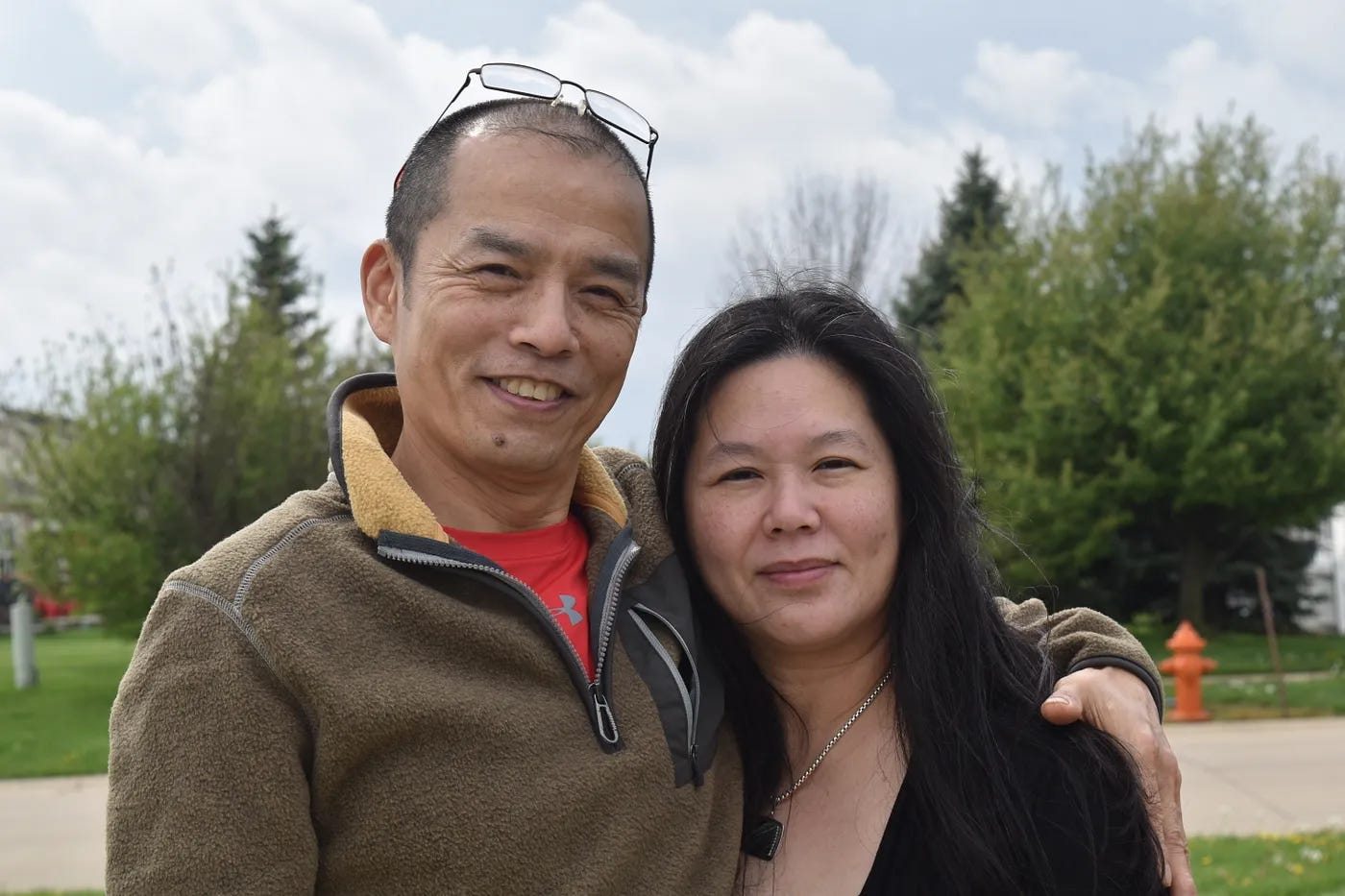
Who I am is a result of the most loving, loyal, intelligent, and hardworking parents I could have ever asked for, and I truly believe I speak on behalf of all Chinese restaurant children that the gratitude that all of us have for our parents is immeasurable. I’m so proud to be part of a community of individuals who have collectively demonstrated unimaginable resilience and strength over the course of history, and I wouldn’t change it for the world.
Works Cited
“Asian American/Pacific Islander Communities and Mental Health.” Mental Health America, https://www.mhanational.org/issues/asian-americanpacific-islander-communities-and-mental-health. Accessed 15 April 2022.
BBC. “Meet the kids who grew up in Chinese takeaways — BBC Stories.” YouTube, BBC, 26 January 2019, Accessed 15 April 2022.
Bellini, Jarrett. “Here’s the REAL reason why most restaurants fail.” CNBC, 15 March 2016, https://www.cnbc.com/2016/01/20/heres-the-real-reason-why-most-restaurants-fail.html. Accessed 15 April 2022.
Bloom, Barbara. “Mental Health Among AAPI Women — NAPAWF.” National Asian Pacific American Women’s Forum, 26 May 2021, https://www.napawf.org/our-work/content/2021/5/26/mental-health-among-aapi-women. Accessed 15 April 2022.
Korczynski, Marek, and Claire Evans. “Customer abuse to service workers: an analysis of its social creation within the service economy.” Sage, vol. 0, no. 0, 2013, p. 17. Google Scholars. Accessed 15 04 2022.
Meisenzahl, Mary. “Restaurant Workers Plan to Quit Due to Abuse From Customers, Managers.” Business Insider, 8 October 2021, https://www.businessinsider.com/restaurant-workers-plan-to-quit-abuse-from-customers-managers-2021-10. Accessed 15 April 2022.
Nierenberg, Amelia, and Eden Weingart. “Chinese Restaurants Are Closing. That’s a Good Thing, the Owners Say. (Published 2019).” The New York Times, 24 December 2019, https://www.nytimes.com/2019/12/24/upshot/chinese-restaurants-closing-upward-mobility-second-generation.html. Accessed 15 April 2022.
Rude, Emelyn. “A Very Brief History of Chinese Food in America.” Time, 8 February 2016, https://time.com/4211871/chinese-food-history/. Accessed 15 April 2022.